Hey folks, we've talked about shutting this blog down for years. Now we are not so much shutting it down as moving it. Please look for new posts at our People's Wine Revolution site. Recent posts include an update on the Northern California Wildfires, and a more whimsical post about fining, and what makes a wine "vegan" or not.
Cheers!
Matt
Friday, October 20, 2017


Wednesday, March 1, 2017
Ansel Adams
A long ago post that mentioned art worth seeing in Napa Valley tasting rooms mentioned the wonderful Ansel Adams collection at Mumm Napa Valley. An alert reader who saw that post asked us to share the link to an Artsy page featuring Adams and related artists. Artsy says their mission is to make all the world's art accessible to anyone. That sounds enough like our mission to bring great wine to the people for us to play along.
Our Artsy contact also mentions that "The High Museum of Art Atlanta is currently exhibiting or scheduled to exhibit “Cross Country: The Power of Place in American Art, 1915-1950”, which features Ansel Adams. As such, we would like to take the opportunity to now promote his work. Our hope is that the timing of this outreach will effectively support both the Museum and Adams."
So take a look at the Artsy page, and if you are in Atlanta pay the High Museum a visit. Be sure to enjoy some fine PWR wine while you peruse the page!
Our Artsy contact also mentions that "The High Museum of Art Atlanta is currently exhibiting or scheduled to exhibit “Cross Country: The Power of Place in American Art, 1915-1950”, which features Ansel Adams. As such, we would like to take the opportunity to now promote his work. Our hope is that the timing of this outreach will effectively support both the Museum and Adams."
So take a look at the Artsy page, and if you are in Atlanta pay the High Museum a visit. Be sure to enjoy some fine PWR wine while you peruse the page!
Monday, December 21, 2015
Vino2 Aerating Glass from Taste of Purple -- Full Review
Taste of Purple was kind enough to send me their Vino2 aerating glass to review. You might have seen the quick and dirty review I dashed off in which I tasted a delicious Oregon Pinot Noir from The Pressing Plant in the Vino2 and in a Riedel Vinum Burgundy glass. I have since done several more side-by-side comparisons and here is my full report.
To cut to the chase, if big bold wines are your thing, this might just be the glass for you! You might also consider the other aerating glass options from Taste of Purple.
To review, the Vino2 wine glass ($39) from Taste of Purple promises to fully aerate wine rapidly, so there is no need to decant a wine to reach its full potential: "The patented design of the VINO2 will fully aerate your wine in just seconds, releasing the components that make up a wines aroma." With the Oregon Pinot, the wine in the Vino2 was silkier but less spicy than when tasted from the Riedel. Which is "better" is a matter of personal preference.

The next wine we tried was a 2012 Pinot Gris from Navarro. The glass on the right is the Vino2. On the left is a glass manufactured by Stölzle. We've owned it so long I have no memory of its price or any other characteristics. In the Stölzle the Pinot Gris showed aromas of stone fruit, jasmine, vanilla and honeysuckle. The wine had bright acid, a textured palate and a long finish. From the Vino2 we picked up less stone fruit, more vanilla, and citrus cream. The wine was similar on the palate but less tart and less textured. The finish was as long. We preferred the wine out of the Stölzle.

Next we tried a 1995 Sagrantino Montefalco from Colpetrone. Sagrantino, in case you are unfamiliar with it, is a grape native to Umbria. It is a rare creature that produces big, tannic wines that age beautifully. The comparison glass on the right is another we have owed for some time. It appears to have been made by a company known as OZ. I have no other information.
In the OZ the Colpetrone showed restrained aromatics, intensity on the palate and little fruit. The wine had a pleasantly soft texture with just a bit of grip and a lovely finish. In the Vino2 the wine had a sharper focus on the attack, more spice and a tight finish. We preferred the Vino2.

Our final comparison was with the Seavey 2007 Chardonnay, a wine that I made. The comparison glass was once again the Riedel Vinum Burgundy. In the Vino2 we got aromas of straw, hay, cut grass, citrus and jasmine. The wine was soft, rich and full on the palate with creamy oak and hints of pear. In the Riedel the aromas were similar but less grassy. The creamy oak came through with a bit more of a bite. Once again, a draw.
The Vino2 clearly influences the perception of the wine. Whether that influence is to the good depends largely on the style of wine. A big bold red wine is the perfect match for this glass, and will seem bigger and bolder but also more approachable from it. For other wine styles, the differences are less compelling. Enjoy!
Have you tried the Vino2? We would love to hear your thoughts.
The Vino2 was sent by Taste of Purple for the purpose of this review. All of the wines mentioned were from my personal collection and were not provided by the producers.
To cut to the chase, if big bold wines are your thing, this might just be the glass for you! You might also consider the other aerating glass options from Taste of Purple.
To review, the Vino2 wine glass ($39) from Taste of Purple promises to fully aerate wine rapidly, so there is no need to decant a wine to reach its full potential: "The patented design of the VINO2 will fully aerate your wine in just seconds, releasing the components that make up a wines aroma." With the Oregon Pinot, the wine in the Vino2 was silkier but less spicy than when tasted from the Riedel. Which is "better" is a matter of personal preference.

The next wine we tried was a 2012 Pinot Gris from Navarro. The glass on the right is the Vino2. On the left is a glass manufactured by Stölzle. We've owned it so long I have no memory of its price or any other characteristics. In the Stölzle the Pinot Gris showed aromas of stone fruit, jasmine, vanilla and honeysuckle. The wine had bright acid, a textured palate and a long finish. From the Vino2 we picked up less stone fruit, more vanilla, and citrus cream. The wine was similar on the palate but less tart and less textured. The finish was as long. We preferred the wine out of the Stölzle.

Next we tried a 1995 Sagrantino Montefalco from Colpetrone. Sagrantino, in case you are unfamiliar with it, is a grape native to Umbria. It is a rare creature that produces big, tannic wines that age beautifully. The comparison glass on the right is another we have owed for some time. It appears to have been made by a company known as OZ. I have no other information.
In the OZ the Colpetrone showed restrained aromatics, intensity on the palate and little fruit. The wine had a pleasantly soft texture with just a bit of grip and a lovely finish. In the Vino2 the wine had a sharper focus on the attack, more spice and a tight finish. We preferred the Vino2.

Our final comparison was with the Seavey 2007 Chardonnay, a wine that I made. The comparison glass was once again the Riedel Vinum Burgundy. In the Vino2 we got aromas of straw, hay, cut grass, citrus and jasmine. The wine was soft, rich and full on the palate with creamy oak and hints of pear. In the Riedel the aromas were similar but less grassy. The creamy oak came through with a bit more of a bite. Once again, a draw.
The Vino2 clearly influences the perception of the wine. Whether that influence is to the good depends largely on the style of wine. A big bold red wine is the perfect match for this glass, and will seem bigger and bolder but also more approachable from it. For other wine styles, the differences are less compelling. Enjoy!
Have you tried the Vino2? We would love to hear your thoughts.
The Vino2 was sent by Taste of Purple for the purpose of this review. All of the wines mentioned were from my personal collection and were not provided by the producers.
Thursday, December 10, 2015
Holidays are here -- Vino2 aerating glass from Taste of Purple (1st look)
A full review of this glass will require comparisons involving several wines and therefore several days. With Hanukkah well underway and Xmas a mere 15 days away, here's a quick preview.

The Vino2 wine glass from Taste of Purple promises to fully aerate wine rapidly, so there is no need to decant a wine to reach its full potential: "The patented design of the VINO2 will fully aerate your wine in just seconds, releasing the components that make up a wines aroma."
The glass has a clever notch in the side that causes the swirled wine to splash and aerate more quickly than it would in a notchless glass.
To fully evaluate this intriguing claim, we'll need to compare many wines side-by-side. Since you might be looking for a gift for a wine lover, here are the results of our first comparison. We'll post a more complete review once all the data are in.

Here's our experimental setup. On the left is the Riedel Vinum Burgundy (Pinot Noir), on sale at present for $50/pair (reg. $60/pair). On the right the Vino2, $39/stem. Neither glass is inexpensive, but if you believe a glass can improve the taste of a wine, and if you don't break your glasses often, this is not an unreasonable investment and might also make a good gift.
Behind the glasses are, on the right, the box the Vino2 came in, and on the left our FIRST WINE: the 2012 Smash It Up Pinot Noir, Willamette Valley, from The Pressing Plant ($20/bottle, Yep, $20/bottle for world class Pinot Noir!). Which, by the way, is a outstanding wine that would also make a great gift for the wine lover in your life. Afraid to buy wine for someone who loves it? Don't be! They'll be thrilled! Trust me.
Other than the notch, the glasses are fairly similar. The Riedel stands 8.25" and has a 25-oz bowl (I think). The Vino2 is 10.5" and boasts a 32-oz bowl. Both are lead crystal.
Out of the Riedel, we got a rich, fruity nose and great fruit on the palate. We described the wine as driven and pure, with black and red fruit that comes across as sweet, though the wine is dry. There is beautiful spice and the wine has a long finish.
Out of the Vino2 the wine was not much different. Aromatics were similar but the wine was different on the palate. It was much silkier and less spicy. The fruit profile was more black, less red. The finish was still long and beautiful.
Round 1 results--DRAW. The Vino2 certainly revealed a different wine, but whether those differences are preferable are up to the drinker.
One more note: despite the Vino2's large bowl, swirling was a bit difficult. I'm sure it's just a matter of practice, but the notch causes the wine to jump (as it should).
Preliminary conclusion: this glass would make a welcome gift and you might enjoy it yourself, as well. We need to evaluate it with more wines before we make a final recommendation.
The Vino2 was sent to us by the manufacturer. We purchased the Smash It Up Pinot Noir.
The Vino2 was sent to us by the manufacturer. We purchased the Smash It Up Pinot Noir.
Tuesday, November 17, 2015
Holiday Bubbles -- Faire La Fête Crémant de Limoux
Wine writers nag that we should drink bubbles whenever we please, but most of us please to do so during the holidays and for other celebrations. The holidays are upon us, and as Champagne prices have increased without remorse in recent years, it is certainly wise to seek alternatives.
Faire la Fête Brut ($18) is an alternative worthy of your consideration. Like Champagne, it comes from France, but from hillside vineyards in the Southwest near Spain. Like Champagne, the wine is a blend of Chardonnay (70%) and Pinot Noir (10%), but with Chenin Blanc (20%) in the mix rather than Champagne's Pinot Meunier. The wine is made in the same manner as Champagne. In fact, Limoux claims to be the birthplace of sparkling wine because the secondary fermentation, which produces the fizz inside each bottle, was invented there.
The principal differences, then, are climate, soil and price. As for climate, the Southwest is certainly warmer than Champagne, though this Crémant still weighs in at a mere 12% alcohol. As for soil, Limoux claims to have both chalky clay marl (similar to Champagne) as well as limestone soils (similar to Burgundy). Price? Well, good luck finding a Champagne anywhere close to $18/bottle.
One more important difference is taste. No one familiar with sparkling wines who is paying attention would mistake this wine for a Champagne. Not because it is not good, but because it tastes different. Generally I would expect a more full-bodied wine to emerge from a warmer climate, but a good many Champagnes have more weight and body than this. This wine is delicate and pretty. It has hints of yeastiness (think fresh bread), is floral but not perfumey, and has a suggestion of lime/citrus. It is crisp and refreshing, and would serve well anywhere you would use a Champagne--on its own for celebratory sipping, or with appetizers ranging from toasted nuts to caviar.
It may not astonish with its finesse, but I have found still less finesse in Champagnes retailing for triple the price.

Many people present sparkling wine as a gift, and this wine would make a fine one. The packaging is quite attractive, with the pale lavender foil playing brilliantly off the bright green label. And no one will be disappointed with the contents.
At $18, this is a bargain in French sparkling wine. Though different than Champagne, it tastes great, and has more in common with its more expensive cousin than do most wines from Prosecco, Cava, or elsewhere.
Enjoy!
This wine was provided by a marketing agent for the producer.
Faire la Fête Brut ($18) is an alternative worthy of your consideration. Like Champagne, it comes from France, but from hillside vineyards in the Southwest near Spain. Like Champagne, the wine is a blend of Chardonnay (70%) and Pinot Noir (10%), but with Chenin Blanc (20%) in the mix rather than Champagne's Pinot Meunier. The wine is made in the same manner as Champagne. In fact, Limoux claims to be the birthplace of sparkling wine because the secondary fermentation, which produces the fizz inside each bottle, was invented there.
The principal differences, then, are climate, soil and price. As for climate, the Southwest is certainly warmer than Champagne, though this Crémant still weighs in at a mere 12% alcohol. As for soil, Limoux claims to have both chalky clay marl (similar to Champagne) as well as limestone soils (similar to Burgundy). Price? Well, good luck finding a Champagne anywhere close to $18/bottle.
One more important difference is taste. No one familiar with sparkling wines who is paying attention would mistake this wine for a Champagne. Not because it is not good, but because it tastes different. Generally I would expect a more full-bodied wine to emerge from a warmer climate, but a good many Champagnes have more weight and body than this. This wine is delicate and pretty. It has hints of yeastiness (think fresh bread), is floral but not perfumey, and has a suggestion of lime/citrus. It is crisp and refreshing, and would serve well anywhere you would use a Champagne--on its own for celebratory sipping, or with appetizers ranging from toasted nuts to caviar.
It may not astonish with its finesse, but I have found still less finesse in Champagnes retailing for triple the price.

Many people present sparkling wine as a gift, and this wine would make a fine one. The packaging is quite attractive, with the pale lavender foil playing brilliantly off the bright green label. And no one will be disappointed with the contents.
At $18, this is a bargain in French sparkling wine. Though different than Champagne, it tastes great, and has more in common with its more expensive cousin than do most wines from Prosecco, Cava, or elsewhere.
Enjoy!
This wine was provided by a marketing agent for the producer.
Saturday, September 26, 2015
A Wine for All Seasons -- Toad Hollow 2014 Dry Rosé of Pinot Noir Sonoma County
Pink wines can be wondrous things, and we are pleased to see that they are ever more popular. (If calling it Brosé makes you comfortable with a pink drink, my friend, then go right ahead.)
Pink wines are delightfully refreshing on a brilliant summer day, on a picnic, at the beach, or at poolside. But there is no reason to stop drinking pink simply because the season has changed. If you have ever enjoyed a pink sparkling wine on a cold New Year's Eve, you probably understand how well pink wines -- some of them, at least -- can stand up to winter. They can also be marvelous companions for fall. In a word, the best pink wines are versatile.
We always make sure to have pink wine on hand to enjoy with our Thanksgiving feast. The savory autumnal flavors are brightened by the wines' lively fresh fruit aromas, and there is no tannin to get in the way.
But there is no need to wait for Turkey Day. Rosé works with all weather, so why not enjoy it during a late resurgence of summer, or let it help you welcome the first hints of fall.
We could not resist reviewing the Toad Hollow 2014 Dry Rosé of Pinot Noir from Sonoma County because it delivered on all its promises and, in fact, on all of the promises of the best pink wines noted above.

With less than 12% alcohol, this wine is full-flavored and not overpowering. It is bright (but not too tart) on the palate, with flavors immediately suggesting strawberry lemonade that resolve to something more like guava and kiwi. Despite the low alcohol there is a pleasing viscosity, and the finish is long.
Talk about versatile! This wine is delicious all by itself. I enjoyed it with a chicken stir fry with sweet and hot peppers, onion, spinach and basil. Toad Hollow's recommendation of roast pork loin with caramelized apples and sweet onions would also be great, as would any dish prepared with traditional autumnal seasoning.
It can be difficult to find serious domestic wine that is artisanally produced and affordable. The Toad Hollow Rosé fits the bill. We also love the packaging. Screwcap, of course, playful but not calculated front label art, and a back label that is wonderfully informative about what's in the bottle and how the consumer might enjoy it.
We look forward to trying more Toad Hollow wines, and we encourage you to give this wonderful pink wine a try: it is delicious, and a bargain to boot.

Pink wines are delightfully refreshing on a brilliant summer day, on a picnic, at the beach, or at poolside. But there is no reason to stop drinking pink simply because the season has changed. If you have ever enjoyed a pink sparkling wine on a cold New Year's Eve, you probably understand how well pink wines -- some of them, at least -- can stand up to winter. They can also be marvelous companions for fall. In a word, the best pink wines are versatile.
We always make sure to have pink wine on hand to enjoy with our Thanksgiving feast. The savory autumnal flavors are brightened by the wines' lively fresh fruit aromas, and there is no tannin to get in the way.
But there is no need to wait for Turkey Day. Rosé works with all weather, so why not enjoy it during a late resurgence of summer, or let it help you welcome the first hints of fall.
We could not resist reviewing the Toad Hollow 2014 Dry Rosé of Pinot Noir from Sonoma County because it delivered on all its promises and, in fact, on all of the promises of the best pink wines noted above.

Eye of the the Toad!
The producers promise fine wines at fair prices. That vision certainly resonates with us. We are quick to praise when that promise is fulfilled, as here, and quick to condemn when that promise is betrayed. At $11.99/bottle retail, Toad Hollow certainly delivers with this wine.With less than 12% alcohol, this wine is full-flavored and not overpowering. It is bright (but not too tart) on the palate, with flavors immediately suggesting strawberry lemonade that resolve to something more like guava and kiwi. Despite the low alcohol there is a pleasing viscosity, and the finish is long.
Talk about versatile! This wine is delicious all by itself. I enjoyed it with a chicken stir fry with sweet and hot peppers, onion, spinach and basil. Toad Hollow's recommendation of roast pork loin with caramelized apples and sweet onions would also be great, as would any dish prepared with traditional autumnal seasoning.
It can be difficult to find serious domestic wine that is artisanally produced and affordable. The Toad Hollow Rosé fits the bill. We also love the packaging. Screwcap, of course, playful but not calculated front label art, and a back label that is wonderfully informative about what's in the bottle and how the consumer might enjoy it.
We look forward to trying more Toad Hollow wines, and we encourage you to give this wonderful pink wine a try: it is delicious, and a bargain to boot.

How do they fit so much information onto the back label?
Note: This wine was received as an unsolicited sample.
Wednesday, September 23, 2015
Corporations, Independent Producers, and the “Soul” of Wine – is there a wine market anymore?
Part 1 -- Beer
Never take a straight path when you can meander—me, just now.
Never take a straight path when you can meander—me, just now.
I'd
been kicking the ideas for this piece around my head for a few days
when a friend asked me what I thought about a looming takeover of a
small, independent beer producer by the largest beer producer in the
world. I think it's sad, that's what. But it also highlights how beer
production is different than wine production, most of the time,
anyway.
When
the “craft” beer scene took off in the '90s, big brewers ignored
the problem, then tried to muscle the problem aside by creating their
own “craft” brands, and finally gave in and started buying those
brands. I'll never understand why they thought they could ignore the
problem. I suppose they imagined they could strongarm the small
brands out of existence by the dual power of their marketing and
distributing strength. In what appears to be a violation of
Post-Prohibition tied house laws, Anheusuer-Busch its own
distributors. At many grocery and liquor stores, the sales reps for
these distributors all but own shelves, determining where the Bud
products go, and where everything else goes. If the store objects,
well, no more Bud for them, and how do they like that?
So the
bigs figured they could keep the smalls out, and to make up for it,
they invented their own “craft” brands, such as Millers's Plank
Road Brewing (I have never understood the branding behind that one).
Those interested in beers with flavor were not impressed, and
apparently had the clout to prevent the bigs from muscling the smalls
out of markets entirely.
The
bigs started buying. The first big purchase that I remember was A-B's
buying Redhook Brewing Company. There are two paths a company can
take when it buys another—keep things more or less the same, or
change things. As I recall, A-B mostly tried to keep things the same
with Redhook. Quality took no apparent hit, and the product line
grew—in mostly uninteresting ways for me—with offerings such as a
branded Starbuck's Espresso stout.
We can
turn back to wine for a moment for contrast. When the big (mostly
liquor) company Heublein bought Inglenook long, long ago, they
changed everything about the winery. The wines were no longer made
from Napa grapes, no longer varietally designated... the only thing
the new wines had in common with the old was the name. Why did
Heublein think that people who had been paying real money for a
bottle of Inglenook Napa Cabernet Sauvignon would buy a jug of
Inglenook “Rhenish”, and why did they think that people looking
for an inoffensive jug wine would be impressed by, or even aware of,
the hallowed name Inglenook? I have no idea, but Heublein sure drove
that brand into the ground quickly.
Here's
an important way that beer is different than wine. Given a good water
source and an intelligible recipe (here's where Heineken may run into
trouble with its recently purchased Lagunitas), beer really can be
mde to order. In fact, a number of recent lawsuits express consumer
outrage that their “imported” Bass, or Tsingtao, or any number of
brands, were actually made in the US. To me, these consumers might
have a case on misleading packaging, and should certainly demand that
the prices for these beers fall since no import duties or import
costs are associated with them any more, but they should not complain
that the beers are any different, because they are not.
In
Part 2 we'll finally get to the point. We promise. Unless we get
distracted again.Never take a straight path when you
can meander—me, just now.
Monday, December 8, 2014
Carlin de Paolo Trio from Italy's Piedmont
In our last post we discussed a wine from Italy's south--Sicily, to be exact. Now we move to Piemonte, in the Northwest. Colorado-based Curious Cork Imports sent us these wines for our consideration.
Carlin de Paolo produced this trio of wines made from Arneis and Nebbiolo. All of these wines are available on Wine.com. [For a completely irrelevant aside, take a look at this article about Verrua Savoia, also in the Piedmont, and the internet woes that plague all of Italy. How fortunate that Carlin de Paolo has a website!]
First up, the Arneis. What? You have not heard of Arneis? That is the shame of too many timid American producers, who could do wonders with this grape but find it easier to keep making the varieties they think you want.

Once again drawing on the authoratative Wine Grapes (Robinson, Harding, Vouillamoz, eds., Ecco), we'll let them tell you that Arneis is "Piemonte's scented and full-bodied signature dry white...... According to local tradition, Arneis used to be planted together with Nebbiolo to attract birds with its strong flavour, thus protecting Nebbiolo, which had .. a better market value..... The wines are generally unoaked, subtly fruit-scented, full-bodied and tasting of ripe pears...." (p. 54).
The 2012 Arneis from Carlin de Paolo lists for $17.99 at Wine.com and weighs in at 13% alcohol. We found it to be pale gold, with muted aromas and hints of grapefruit rind. The wine has a medium body with a juicy finish. We detected hints of citrus and dried flowers, such as chamomile. The wine has a very pleasant texture and we enjoyed hints of thyme and tarragon. This wine is refreshing and interesting, but mostly a quaffer. We recommend using it as an aperitif or serving it with a light pasta (perhaps with saffron), pork chop, chicken saltimbocca or even chicken salad. We enjoyed it with pan-sauteed salmon with couscous and sauteed broccoli.
The next two Carlin de Paolo wines were both made from the Nebbiolo grape. Held in the same esteem as Pinot Noir and Cabernet Sauvignon, Nebbiolo is one of the few Italian grapes we do not think should be more widely planted in California. For every stellar example from California--scratch that; the only one we've enjoyed from California was the excellent version produced by Lone Madrone. The grape belongs in Piemonte.
There it produces three broad categories: Barolo and Barbaresco, and Langhe for everything that doesn't grow in those two delimited areas. But wait a minute, what about this Terre Alfieri DOC? It was new to me before receiving these wines.
Terre Alfieri was established in 2009 and consists of all of 42 acres (17 hectares over there). Small potatoes. It was recognized for its quality but is so small we wonder who organized the recognition. The Arneis discussed above also hails from that DOC.

The bottle on the right is the Terre Alfieri bottling, with the Barolo on the left. The 2010 Carlin de Paolo Nebbiolo Terre Alfieri is all of $18.99 at Wine.com.
We found it to be a clear maroon (such color is typical of Nebbiolo), with aromas of fresh leather (rawhide, not Brettanomyces), cocoa powder and roasted coffee bean. It is smooth and serious on the palate. The tannins are ample but fine and the wine has a long finish. Subtle fruit notes include cherry, raspberry, and blackberry. It should open up with decanting or further bottle age. It is a very pretty wine.
Carlin de Paolo produced this trio of wines made from Arneis and Nebbiolo. All of these wines are available on Wine.com. [For a completely irrelevant aside, take a look at this article about Verrua Savoia, also in the Piedmont, and the internet woes that plague all of Italy. How fortunate that Carlin de Paolo has a website!]
First up, the Arneis. What? You have not heard of Arneis? That is the shame of too many timid American producers, who could do wonders with this grape but find it easier to keep making the varieties they think you want.
Arneis with Fig Tree
Once again drawing on the authoratative Wine Grapes (Robinson, Harding, Vouillamoz, eds., Ecco), we'll let them tell you that Arneis is "Piemonte's scented and full-bodied signature dry white...... According to local tradition, Arneis used to be planted together with Nebbiolo to attract birds with its strong flavour, thus protecting Nebbiolo, which had .. a better market value..... The wines are generally unoaked, subtly fruit-scented, full-bodied and tasting of ripe pears...." (p. 54).
The 2012 Arneis from Carlin de Paolo lists for $17.99 at Wine.com and weighs in at 13% alcohol. We found it to be pale gold, with muted aromas and hints of grapefruit rind. The wine has a medium body with a juicy finish. We detected hints of citrus and dried flowers, such as chamomile. The wine has a very pleasant texture and we enjoyed hints of thyme and tarragon. This wine is refreshing and interesting, but mostly a quaffer. We recommend using it as an aperitif or serving it with a light pasta (perhaps with saffron), pork chop, chicken saltimbocca or even chicken salad. We enjoyed it with pan-sauteed salmon with couscous and sauteed broccoli.
The next two Carlin de Paolo wines were both made from the Nebbiolo grape. Held in the same esteem as Pinot Noir and Cabernet Sauvignon, Nebbiolo is one of the few Italian grapes we do not think should be more widely planted in California. For every stellar example from California--scratch that; the only one we've enjoyed from California was the excellent version produced by Lone Madrone. The grape belongs in Piemonte.
There it produces three broad categories: Barolo and Barbaresco, and Langhe for everything that doesn't grow in those two delimited areas. But wait a minute, what about this Terre Alfieri DOC? It was new to me before receiving these wines.
Terre Alfieri was established in 2009 and consists of all of 42 acres (17 hectares over there). Small potatoes. It was recognized for its quality but is so small we wonder who organized the recognition. The Arneis discussed above also hails from that DOC.
Nebbiolo siblings
The bottle on the right is the Terre Alfieri bottling, with the Barolo on the left. The 2010 Carlin de Paolo Nebbiolo Terre Alfieri is all of $18.99 at Wine.com.
We found it to be a clear maroon (such color is typical of Nebbiolo), with aromas of fresh leather (rawhide, not Brettanomyces), cocoa powder and roasted coffee bean. It is smooth and serious on the palate. The tannins are ample but fine and the wine has a long finish. Subtle fruit notes include cherry, raspberry, and blackberry. It should open up with decanting or further bottle age. It is a very pretty wine.
That brings us to the Barolo! While Barolo can be found for under $40, that is a rare thing, and with good reasons. The rules of the DOCG (that must be followed to put Barolo on the label) require serious aging, for one thing.
The Carlin de Paolo 2009 Barolo is available for $39.99 at Wine.com. Perhaps. The 2008 is, anyway. We don't see the 2009 listed.
As suggested above, Barolo spends an eternity in the producer's cellar before being released, and then can seem to need an eternity in the consumer's cellar before it is ready to drink. With that in mind, we evaluated the wine upon opening, then evaluated after a 45 minute wait and a double decantation (bottle to decanter and back to bottle), and then revisited the wine a few hours after that. Here is the play-by-play.
On initial uncorking: brick red in color (more red than the maroon of the Terre Alfieri, above), tight on the nose and palate. Present but smooth tannins. Long finish with spice and grip. Needs to open.
After 45 minutes and double decanting: color unchanged. More generous on nose and palate. Subtle fruit. Cherry, blackberry. A lot of spice box: cedar, sandalwood, a hint of clove. Flowers: violet and rose petal. Bitter chocolate. Formidable. Complex. Probably has much more to offer with time in bottle and more
time in decanter.
Later still. Richer and more complex.
Good acidity. Great complexity. Still fruit-shy. Tannins holding in
there but not overwhelming.
We enjoyed this wine very much. It would pair well with any simply roasted meat, but we enjoyed it with a pasta with caramelized cabbage, anchovies and bread crumbs, a recipe we discovered in the New York Times. We hope you enjoy it, too!
Friday, December 5, 2014
Siciliana Nero d'Avola 2013
We were recently delighted to be contacted by Colorado's Curious Cork Imports. They graciously offered to send some wines from their portfolio for our review. The wines they sent are available via Wine.com, which means they are available just about everywhere in the US. It can certainly be frustrating to hear great things about an imported wine only to be unable to find it anywhere. In this post we'll discuss the Nero d'Avola from Siciliana. Stay tuned for a post on three wines from Carlin de Paolo, in the Piedmont.

The Siciliana 2013 Nero d'Avola sells for $12.99 on Wine.com. The grape variety, Nero d'Avola, has been growing in prominence of late, and for good reason. It is a grape that can thrive in the Sicilian heat while still producing wines of great color and structure. It is usually quite affordable as well. Pretty hard to beat.
Long term readers of this blog will recognize Nero d'Avola as a grape that I have championed for California. I believe that it would tolerate the heat and dry conditions of California's Central Valley and produce much better wine than most of the more popular varieties grown there now. Merlot, for instance, can produce outstanding wines, but not when it is grown in a very hot, very dry climate.
In the expensive-but-worth-every-penny Wine Grapes (Robinson, Harding, Vouillamoz, eds., Ecco) Nero d'Avola is said to most likely hail from... you guessed it, Avola, in the Siracusa province on Sicily. They say that it is Sicily's most planted variety and that the wines are known for color, fullness of body, and the ability to age. "At its best, Nero d'Avola produces wines that have a wild plum and sweet chocolate character, high levels of tannins, and decent acidity" (p 724).
So if you have not yet tried a Nero d'Avola, we strongly encourage you to seek one out. And why not this one? It is a classic example. We found it to be bright ruby in the glass and quite aromatic. The wine comes across as somewhat one-dimensional on the palate but 6 months to a year more in bottle should give it time to open up. It is tightly wound with bright acidity and soft tannins. This wine would be a perfect accompaniment to tomato-based foods such as pizza or pasta, or with rich foods such as salumi or other cured meats.
A lovely fall bottle on a lovely fall day
The Siciliana 2013 Nero d'Avola sells for $12.99 on Wine.com. The grape variety, Nero d'Avola, has been growing in prominence of late, and for good reason. It is a grape that can thrive in the Sicilian heat while still producing wines of great color and structure. It is usually quite affordable as well. Pretty hard to beat.
Long term readers of this blog will recognize Nero d'Avola as a grape that I have championed for California. I believe that it would tolerate the heat and dry conditions of California's Central Valley and produce much better wine than most of the more popular varieties grown there now. Merlot, for instance, can produce outstanding wines, but not when it is grown in a very hot, very dry climate.
In the expensive-but-worth-every-penny Wine Grapes (Robinson, Harding, Vouillamoz, eds., Ecco) Nero d'Avola is said to most likely hail from... you guessed it, Avola, in the Siracusa province on Sicily. They say that it is Sicily's most planted variety and that the wines are known for color, fullness of body, and the ability to age. "At its best, Nero d'Avola produces wines that have a wild plum and sweet chocolate character, high levels of tannins, and decent acidity" (p 724).
So if you have not yet tried a Nero d'Avola, we strongly encourage you to seek one out. And why not this one? It is a classic example. We found it to be bright ruby in the glass and quite aromatic. The wine comes across as somewhat one-dimensional on the palate but 6 months to a year more in bottle should give it time to open up. It is tightly wound with bright acidity and soft tannins. This wine would be a perfect accompaniment to tomato-based foods such as pizza or pasta, or with rich foods such as salumi or other cured meats.
If you do try it, we would love to know what you think.
Wednesday, August 6, 2014
Who owns what, redux. This time in Australia.
By far the most read post on this blog is "Who Owns What-A Guide to Wine Brands," in which we revealed the corporate ownership of many wine brands (to the best of our knowledge, in 2009).
Today we stumbled upon an article about an Australian winemaker, Sarah Collingwood, who has published a similar list, listing all the brands that are actually the products of two grocery store chains, Coles and Woolsworth.
Since few of our readers live in Oz, our readers are unlikely to encounter these wines, but I thought the list and the animus behind it were both interesting. The lists are incredibly long, for one thing. Those grocery stores must have big marketing departments.
Ms. Collingwood appears to consider these brands fraudulent, in that they appear to be the products of small, family-owned wineries like her own when they are not.
Of course, US grocery stores and others around the world do similar branding of wines and other products. What do you think are the stores' ethical responsibilities to reveal the true ownership of the brands?
Today we stumbled upon an article about an Australian winemaker, Sarah Collingwood, who has published a similar list, listing all the brands that are actually the products of two grocery store chains, Coles and Woolsworth.
Since few of our readers live in Oz, our readers are unlikely to encounter these wines, but I thought the list and the animus behind it were both interesting. The lists are incredibly long, for one thing. Those grocery stores must have big marketing departments.
Ms. Collingwood appears to consider these brands fraudulent, in that they appear to be the products of small, family-owned wineries like her own when they are not.
Of course, US grocery stores and others around the world do similar branding of wines and other products. What do you think are the stores' ethical responsibilities to reveal the true ownership of the brands?
Wednesday, July 16, 2014
Naked Wines (part 1)
Have you heard of Naked Wines? Like us, they are trying a different than normal approach to get great wines to the thirsty masses. Naked now owns an actual winery in Sonoma County (their UK and Aus operations are beyond my purview), but they don't work with a single winemaker. Rather, they help a number of winemakers realize their dreams by funding specific projects that are then made available only* to Naked Wines's members. The * is because they have a tasting room in Napa and one, I believe, at the winery in Kenwood, California, where anyone can walk in and buy whatever they please, member or not.
Member isn't quite the right word, anyway. Naked calls them "Angels." Angels are on tap for a certain dollar amount each month. The money remains their own, but since they are unlikely to spend it each month, Naked is able to invest it in their winemakers' projects.
I considered becoming a Naked winemaker when they first began their California operation. At the time they did not have a physical winery, and neither did I. Finding a way to produce wine for Naked did not work for me, but it did (or did later) for many of my friends, including Jac Cole, Leigh Meyering, Macario Montoya, Jessica Tomei, Ken Deis, Jim Olsen, and more. I have not had the chance to try all of their wines, let alone the wines produced by those I do not yet know, but all are highly skilled winemakers. I will seek out these wines and report on what I find. In the meantime, if you are curious about Naked, please visit http://us.nakedwines.com or click on one of the banners in this post.
Banners in this post? Yes, Naked asked me to become what they call an "affiliate." Should anyone become an Angel thanks to my posting, Naked will send some dough my way. But that's not why I am posting about Naked. I am posting because Naked, just like the People's Wine Revolution, is trying to bring great wine to great people at great--that is, affordable--prices. Whether they, or we, succeed, is for you to decide.
Free Delivery on Orders Over $100 or $9.99 Flat Rate Shipping on All Other Orders
Member isn't quite the right word, anyway. Naked calls them "Angels." Angels are on tap for a certain dollar amount each month. The money remains their own, but since they are unlikely to spend it each month, Naked is able to invest it in their winemakers' projects.
I considered becoming a Naked winemaker when they first began their California operation. At the time they did not have a physical winery, and neither did I. Finding a way to produce wine for Naked did not work for me, but it did (or did later) for many of my friends, including Jac Cole, Leigh Meyering, Macario Montoya, Jessica Tomei, Ken Deis, Jim Olsen, and more. I have not had the chance to try all of their wines, let alone the wines produced by those I do not yet know, but all are highly skilled winemakers. I will seek out these wines and report on what I find. In the meantime, if you are curious about Naked, please visit http://us.nakedwines.com or click on one of the banners in this post.
Banners in this post? Yes, Naked asked me to become what they call an "affiliate." Should anyone become an Angel thanks to my posting, Naked will send some dough my way. But that's not why I am posting about Naked. I am posting because Naked, just like the People's Wine Revolution, is trying to bring great wine to great people at great--that is, affordable--prices. Whether they, or we, succeed, is for you to decide.
Free Delivery on Orders Over $100 or $9.99 Flat Rate Shipping on All Other Orders
Thursday, February 14, 2013
Plastic wine bottles?
We here at Revolutionary HQ are big fans of alternative packaging. Glass bottles sealed with tree bark are just so 18th Century. Yet plastic gives us pause. Gentle readers, would you buy wine in a plastic bottle? We shall explore the pros and cons below. Please read on and weigh in. We would love to hear your questions, or any concerns we fail to address. We would also like your opinion on whether you would buy a wine in a plastic bottle, especially if that wine happened to be one of our own.
Pros and Cons of Plastic versus Glass
Please let us know what you think! Even a simple thumbs up or down would be welcome. Thanks!
Pros and Cons of Plastic versus Glass
- Extremely light weight. The plastic bottles we have seen weigh in at 54 grams--less than 2 ounces. The glass bottle we use at present weighs 468 grams, or just over 1 pound. A "light weight" version is still 400 grams (more than 14 ounces).
Weight is important in at least three regards. First is the carbon footprint. Moving mass around takes energy, and the more mass you move, the more energy is required. At a difference of 414 grams per bottle, each case of wine bottled in plastic would weigh 4,968 grams less than the same case of wine bottled in glass--almost 11 pounds! That adds up as the wine moves around the country.
The second way that weight matters is to those who handle it. A case of our wine weighs 36 pounds. If it were bottled in plastic it would be 25 pounds. That's a big difference to anyone stacking, packing, racking, or hauling, including you, the consumer.
Finally, weight is important in reducing shipping costs. Most shipping charges are determined by weight and distance. Reduce the weight and the shipping costs will fall. - Carbon Emissions. In addition to the carbon emissions related to moving the wine around, we must consider the carbon emitted in producing the plastic bottle compared to one of glass. According to one plastic bottle producer (do please consider the source), "air pollution and greenhouse gas emissions [are reduced by] more than 50% compared to glass bottles," and "it takes 77% less water to make a [plastic] bottle."
We don't (yet!) have any independent numbers, but we do know that it takes a lot of energy to make glass, and that amount is about the same whether the source material is virgin sand or recycled bottles.
But, ah, at least glass can be recycled! What about plastic? These wine bottles are made from PET, the same plastic used for soda bottles. Those bottles have been "recyclable" for some time now, and the industry knows how to do it. But do they? We know very little about plastic recycling, and welcome your input. - Breakage. Certainly a plastic bottle is less prone to breaking than glass.
- Transportability. Many public places prohibit glass containers. A plastic wine bottle would let you take your wine to more places.
- Shelf-life. Plastic is gas-permeable. The wine bottles in question have are specially lined to reduce oxygen transmission, but even still the manufacturers recommend storing your plastic-bottled wine no more than 1.5 to 2 years. We imagine that most of the wine we produce is consumed in that window, but we also pride ourselves that our wine will develop beautifully over a much longer period.
Please let us know what you think! Even a simple thumbs up or down would be welcome. Thanks!
Thursday, May 3, 2012
Bea's Labels

We bottled our entire production of 2011 Viognier from the two vines at our house today (all five bottles). Our daughter was very eager to make the labels for the wine. We started with blank label sheets, water colors and markers, and made about 18 labels. She then selected her fave-five, and we applied them together. This wine is not for sale, so no need for any words. I think they are beautiful. We may have to do a few more that we can scan to use as the basis for a future PWR label.
Saturday, March 3, 2012
Creative winemaking part 2, in which we confess our error
In our previous post we mused about the
nature of creativity in winemaking. To wit: is there any, or even
room for any?
We compared winemakers to chefs,
contrasting the way in which chefs are applauded for novel technique
and approaches to food, while the winemaker is expected to get out of
the way and allow the grape to express itself.
Part of the difference, of course, is
that food has few boundaries, even if it does have tradition. A
Béchamel must be a
Béchamel, but if the cook
changes it enough that it becomes something new, no one seems to
mind. A chef can use wine, but if a winemaker uses food, the product
is no longer wine. In that sense wine is constrained.

Béchamel. Thank you Wikipedia.
But really, I missed the point. The
nature of creativity is all but impossible to discuss because it
can't be known until it appears. If we say “X would be something
new in wine,” we've already created it. All that remains is the
doing. I would argue that wine types beyond still wine, such as
sparkling and fortified arose out of creativity, along with
creativity's dance partner, good fortune. Other winemaking
differences or preferences are more reflections of style than of
creativity.
Where and when the next creative
breakthrough will arise remains to be seen. We'll work on it.
Promise.
Wednesday, February 29, 2012
The role of a winemaker, the role of a chef
Herewith some rambling thoughts on the nature of creativity in winemaking. Expect revisions and updates as the writer's brain continues its churning. Please weigh in with your own thoughts and suggestions.
Winemakers must be a self-effacing lot. How many times do we hear winemakers say their job is to take perfect fruit and get out of the way, letting the grapes express their greatness in wine?
Chefs of course seek out the finest ingredients, but diners would be disappointed if chefs did the disappearing act that winemakers claim to aspire to.
In simply prepared, or familiar, dishes the quality of the ingredients may matter as much as the technique. But technique is what piques our interest, and why many of us are willing to pay big money to eat food. Even perfect ingredients cost much less than the plate prepared from them at a restaurant. We are paying for technique.

What is the creative talent in wine, and how can it be set free? Winemakers know that the self-effacing statement is a convenient fiction that marketers and, we hope, the public want to hear. The winemaker must make decisions that will greatly influence the finished wine, and there really is no true expression of the fruit, unless you consider that to be the shriveled or rotten end state of unpicked grapes.
Is deciding to pick at 25 degrees Brix (percent sugar in the grapes) rather than 22, or 27, a creative decision? Are the other routine decisions of how to handle the fruit and fermenting must, and how to age the wine creative, or stylistic decisions?
Adria says that the first person to make a mousse expanded the culinary language. What's an analogy in wine? Aside from the endless grape varieties wine can be made with, we have categories such as still, sparkling, fortified. Sometimes grapes are processed in some way before fermentation, e.g., Amarone, Ice Wine. Relatively new (or returned) to the wine world are the "orange" wines, white wines fermented and aged on the skins, often in oxidative conditions. We also have new techniques at hand, such as flash-detente, electrodialysis, and reverse osmosis with selective membranes to adjust the concentration of compounds such as tartaric acid, acetic acid, alcohol and ethylphenols. Are these techniques expanding the language of wine? Do they offer new creative outlets?
Do the ever-popular Biodynamics(tm) rules for farming enhance the winemaker's creative options?
In truth, winemakers love to share ideas, and these discussions can lead to experimentation in the winery. Both the conversations and the experiments are a lot of fun. Is it creative to try a technique that another winemaker is already using? What is a creative breakthrough in wine, and where will the next come from?
Winemakers must be a self-effacing lot. How many times do we hear winemakers say their job is to take perfect fruit and get out of the way, letting the grapes express their greatness in wine?
Chefs of course seek out the finest ingredients, but diners would be disappointed if chefs did the disappearing act that winemakers claim to aspire to.
In simply prepared, or familiar, dishes the quality of the ingredients may matter as much as the technique. But technique is what piques our interest, and why many of us are willing to pay big money to eat food. Even perfect ingredients cost much less than the plate prepared from them at a restaurant. We are paying for technique.
Technique.
From Adria's Wikipedia page and used under a Creative Commons License. Thanks!
The current issue of Lucky Peach has a wonderful, thought-provoking article on Ferran Adria, a master of technique to say the least. Adria makes the point clearly: "I laugh now when people say 'No, the future is the product, the ingredients.' That is gibberish. What's important is the creative talent."What is the creative talent in wine, and how can it be set free? Winemakers know that the self-effacing statement is a convenient fiction that marketers and, we hope, the public want to hear. The winemaker must make decisions that will greatly influence the finished wine, and there really is no true expression of the fruit, unless you consider that to be the shriveled or rotten end state of unpicked grapes.
Is deciding to pick at 25 degrees Brix (percent sugar in the grapes) rather than 22, or 27, a creative decision? Are the other routine decisions of how to handle the fruit and fermenting must, and how to age the wine creative, or stylistic decisions?
Adria says that the first person to make a mousse expanded the culinary language. What's an analogy in wine? Aside from the endless grape varieties wine can be made with, we have categories such as still, sparkling, fortified. Sometimes grapes are processed in some way before fermentation, e.g., Amarone, Ice Wine. Relatively new (or returned) to the wine world are the "orange" wines, white wines fermented and aged on the skins, often in oxidative conditions. We also have new techniques at hand, such as flash-detente, electrodialysis, and reverse osmosis with selective membranes to adjust the concentration of compounds such as tartaric acid, acetic acid, alcohol and ethylphenols. Are these techniques expanding the language of wine? Do they offer new creative outlets?
Do the ever-popular Biodynamics(tm) rules for farming enhance the winemaker's creative options?
In truth, winemakers love to share ideas, and these discussions can lead to experimentation in the winery. Both the conversations and the experiments are a lot of fun. Is it creative to try a technique that another winemaker is already using? What is a creative breakthrough in wine, and where will the next come from?
Monday, February 13, 2012
Valentine's Day Thoughts
In 1998 I visited France for the first time, in the company of my wonderful wife-to-be. We explored Paris, Burgundy, the Rhone and Provence. Not bad for a 2-week visit. Between Burgundy and the Rhone we took an impulsive side trip to the Jura, nestled against the western tip of Switzerland.
There we found fabulously stinky cheeses and impossibly obscure (but delicious!) wines, from the ethereal Poulsards and Trousseaus to the tangy Savagnins and Vins de paille. We also found a spectacular campground, set among lakes underneath towering mountains.

We found no grocery store, nor any other purveyor of food save for the one-Michelin-star restaurant at the campground itself (yes, that's how they do it in France. This is not KOA). Lacking appropriate attire to enter the restaurant, we sheepishly approached the kitchen door and explained our plight. "One hour" the shadowy figure behind the screen declared, "and 20 francs."
An hour later we were clutching a perfectly roast chicken and an abundance of frites. We returned to our campsite for the feast. We lacked silverware and napkins, but we did have a bottle of 1985 Burgundy we had found in a grocery store in Chablis for a song. '85 was a great vintage, but would a simple AOC Bourgogne hold up for 13 years? Yes, dear readers. Yes.
That meal, wonderful roast chicken, perfectly crisp french fries, and a simple but well aged Burgundy, enjoyed in the beautiful outdoors with my true love, is the most happily remembered meal of my life.
It's the day before Valentine's and, like many of you, we have yet to firm up our plans for tomorrow. As we consider our options, we'll look for inspiration in the memories of our time in the Jura. Enjoy your day!
Note: Inspiration for this post came from http://elsbethcooksanddrinks.wordpress.com/ Thank you, Elsbeth!
There we found fabulously stinky cheeses and impossibly obscure (but delicious!) wines, from the ethereal Poulsards and Trousseaus to the tangy Savagnins and Vins de paille. We also found a spectacular campground, set among lakes underneath towering mountains.
Source: http://www.vacances-camping-jura-location.com/photos/photo-article-1285665301-1285748464.jpg
We found no grocery store, nor any other purveyor of food save for the one-Michelin-star restaurant at the campground itself (yes, that's how they do it in France. This is not KOA). Lacking appropriate attire to enter the restaurant, we sheepishly approached the kitchen door and explained our plight. "One hour" the shadowy figure behind the screen declared, "and 20 francs."
An hour later we were clutching a perfectly roast chicken and an abundance of frites. We returned to our campsite for the feast. We lacked silverware and napkins, but we did have a bottle of 1985 Burgundy we had found in a grocery store in Chablis for a song. '85 was a great vintage, but would a simple AOC Bourgogne hold up for 13 years? Yes, dear readers. Yes.
That meal, wonderful roast chicken, perfectly crisp french fries, and a simple but well aged Burgundy, enjoyed in the beautiful outdoors with my true love, is the most happily remembered meal of my life.
It's the day before Valentine's and, like many of you, we have yet to firm up our plans for tomorrow. As we consider our options, we'll look for inspiration in the memories of our time in the Jura. Enjoy your day!
Note: Inspiration for this post came from http://elsbethcooksanddrinks.wordpress.com/ Thank you, Elsbeth!
Sunday, December 18, 2011
Hey, Maury! VdN, flor and more
We like to believe that winemakers are a naturally curious, inquisitive bunch. To that end, we have an experiment going that delights and amazes us. We are working on an admittedly bizarre dessert wine, inspired by the wines of Maury, in Southwest France. These wines are made from Grenache (mostly), but the fermentation is stopped by the addition of brandy (as is the case with Port) to leave some unfermented sugar in the wine. Then they are left outside in small glass containers, experiencing wild swings in temperature, and a great deal of ultraviolet exposure, along with some oxygen.
We decided to try this a bit late, when all of our Grenache had long since finished fermentation. So we combined fermented Grenache, unfermented Syrah juice, and grape alcohol to achieve about 20% alcohol (as in Maury). Two minuscule gallon jugs now sit exposed to the elements, as they will for at least a couple of years.
The odd thing is that one of the jugs has developed a flor, or yeast film (most commonly seen in Sherry). How are these yeasts able to survive such high alcohol, not to mention near-freezing temperatures? We'd like to know. Perhaps we'll manage to take a sample for analysis, to see what's in there.
Sadly, this is not a commercial-scale project, though of course we'll be "analyzing" the wine when it is finished. Inform of us of your analytical bona fides if you would like to help, when the time comes.
Pictures will follow.
Thursday, July 14, 2011
Forlorn Hope Wines
What were we thinking? We weren't. Should've brought the camera. Should've taken notes. Shoulda shoulda shoulda.
Matthew Rorick of Forlorn Hope Wines just hosted us and allowed us to taste the wines he will soon bottle. Readers, they are astonishing.
Matthew's wines are Rare Creatures. That is, he produces wines from varieties not seen everyday. When was the last time you had a Verdelho? Okay, how about Alvarelhao? Really? Then what about St-Laurent? We thought so.
Matthew's not using these grapes because they are obscure but because he believes they can make wonderful wines. And in his hands, they certainly do.
Matthew is passionate about his winemaking, and we really mean it. His eyes are bright and he is lively and animated as he talks about his wines. He is full of ideas for the next vintage and always trying to learn more from past vintages with each taste. He follows some admirable rules--no added water or acid, for instance (not to mention insisting upon printing the true alcohol level on his labels*)--but is always willing to experiment. We got to taste a 2010 Gewurztraminer fermented to dryness on its skins (this is extremely unusual). It was proudly, truly and beautifully Gewurz, but it had extra layers of complexity and interest thanks to the maceration on the skins.
We also got to try a Charbono that was done 100% whole cluster. It had the pure, rich dark fruit of Charbono supported by a firm foundation of tannin from the stems.
Prices for his wines are beyond reasonable. Please seek them out and support Matthew's project. And next time I'll bring a camera.
*TTB rules allow as much as 1.5% error in either direction. And that's just what's allowed.
Matthew Rorick of Forlorn Hope Wines just hosted us and allowed us to taste the wines he will soon bottle. Readers, they are astonishing.
Matthew's wines are Rare Creatures. That is, he produces wines from varieties not seen everyday. When was the last time you had a Verdelho? Okay, how about Alvarelhao? Really? Then what about St-Laurent? We thought so.
Matthew's not using these grapes because they are obscure but because he believes they can make wonderful wines. And in his hands, they certainly do.
Matthew is passionate about his winemaking, and we really mean it. His eyes are bright and he is lively and animated as he talks about his wines. He is full of ideas for the next vintage and always trying to learn more from past vintages with each taste. He follows some admirable rules--no added water or acid, for instance (not to mention insisting upon printing the true alcohol level on his labels*)--but is always willing to experiment. We got to taste a 2010 Gewurztraminer fermented to dryness on its skins (this is extremely unusual). It was proudly, truly and beautifully Gewurz, but it had extra layers of complexity and interest thanks to the maceration on the skins.
We also got to try a Charbono that was done 100% whole cluster. It had the pure, rich dark fruit of Charbono supported by a firm foundation of tannin from the stems.
Prices for his wines are beyond reasonable. Please seek them out and support Matthew's project. And next time I'll bring a camera.
*TTB rules allow as much as 1.5% error in either direction. And that's just what's allowed.
Friday, May 27, 2011
Another video!
The last movie was such a hit (see post below) that we could not help ourselves. Here's our latest video post:
We hope you like it. Comments and suggestions are most certainly welcome!
We hope you like it. Comments and suggestions are most certainly welcome!
Wednesday, April 13, 2011
Karma--more innovative packaging
The latest in our ongoing series on innovative wine packaging is Karma California Brut. We discovered it on a Virgin America flight and given the cool bottle and our naive belief that Virgin would have wine worth drinking we ordered it up.
Well, at least the bottle was cool. Not much really innovative--it's still glass, and it has a screwcap--but it sure is not traditional sparkling wine packaging. We appreciate that much, at least. Read on if you care to learn more about the wine.
 The wine was close to bland, and that is probably good. It does have a slight sweetness (so why call it Brut?) that builds over time, annoyingly. Our overall rating: better than Sofia. Which is not saying much.
The website is surprisingly cool, aside from the autoplay, horrible music. What is up with that?
Well, at least the bottle was cool. Not much really innovative--it's still glass, and it has a screwcap--but it sure is not traditional sparkling wine packaging. We appreciate that much, at least. Read on if you care to learn more about the wine.

The website is surprisingly cool, aside from the autoplay, horrible music. What is up with that?
Tuesday, March 22, 2011
Odds and Ends
Item: Organic? Biodynamic? Sustainable? What do these terms mean and what's the best way to farm? The answer, of course, is outrageously complex. Slate did a fine job tackling the question, given the size of the piece. They gave sustainable farming short shrift, however, as we point out in the comments. The big knock on "sustainable" is that it is ill-defined. True, but that's not as big a problem as it seems. Bigger, we feel, is that the threshold for calling yourself sustainable under the certification systems is pretty low. If you'd like to learn more about sustainable grape growing, take a look at the Lodi Rules program, and the California Sustainable Winegrowing Alliance.
For the record, PWR Syrah comes from the CCOF Organic Massa Ranch, in Yountville, Napa Valley, while our 2010 Grenache comes from the Hunters Oak Vineyard, farmed sustainably in accordance with the Lodi Rules.
Item: Our quest to discover new ways to package wine continues. Today we learned about Indulge Wine in pouches, which is basically bag-in-box without the box. 2 wines are available in 1.5L pouches (equivalent to 2 standard wine bottles). Retail price is $20 each for 2009 Sauvignon Blanc (North Coast) and 2009 Pinot Noir (Central Coast). Available only in California at present. We hope to find the wines soon to report on their quality.
We also learned about Boisset's new twist on bag-in-box....bag-in-barrel. We're not sure we see the point, as the barrel will take up more space than a box and counteract some of the environmental benefits of BiB (less packaging, lighter weight), but as this article states, it would make a good conversation piece. And Boisset points out that the barrel is re-fillable, so it would only be transported once.
 Item: We can't resist sharing this picture with you. We are so proud. We held back a tiny amount of the 2009 Bea's Knees and bottled it in January in magnums. Here they are.
For the record, PWR Syrah comes from the CCOF Organic Massa Ranch, in Yountville, Napa Valley, while our 2010 Grenache comes from the Hunters Oak Vineyard, farmed sustainably in accordance with the Lodi Rules.
Item: Our quest to discover new ways to package wine continues. Today we learned about Indulge Wine in pouches, which is basically bag-in-box without the box. 2 wines are available in 1.5L pouches (equivalent to 2 standard wine bottles). Retail price is $20 each for 2009 Sauvignon Blanc (North Coast) and 2009 Pinot Noir (Central Coast). Available only in California at present. We hope to find the wines soon to report on their quality.
We also learned about Boisset's new twist on bag-in-box....bag-in-barrel. We're not sure we see the point, as the barrel will take up more space than a box and counteract some of the environmental benefits of BiB (less packaging, lighter weight), but as this article states, it would make a good conversation piece. And Boisset points out that the barrel is re-fillable, so it would only be transported once.
Wednesday, January 12, 2011
FLASQ Wines in Aluminum Bottles
We are pleased to take a break from reporting on PWR's Progress to tell you about a new discovery, FLASQ wines in aluminum cans bottles. We love alternatives to glass bottles for ever-so-many reasons, and we thrill to learn of any new wines so packaged. Some such products reviewed in the past have disappointed, while we have raved about others.
To repeat ourselves, the glass bottle with cork stopper was a great idea 400 years ago, but we can surely do better. There is nothing inherently wrong with any of the alternatives we know of--aluminum cans/bottles, bag-in-box, tetrapak, screwcaps--except that none of these technologies so far seems up to long term wine storage. But most wine is consumed within hours of purchase, and most wine intended for aging will be put in a glass bottle, anyway.
Quality is the key. Sadly, most wine buyers are afraid. Afraid of buying the "wrong" wine, or of buying a wine that will make them look foolish. If such a consumer musters up the courage to buy a wine that is not even in a glass bottle, that courage must be rewarded with good tasting wine. So how about the FLASQ wines?
FLASQ's inaugural release consists of a 2009 Chardonnay (Monterey County) and a 2009 Merlot (San Luis Obispo County). FLASQ kindly provided a sample of each, and we are happy to report that we like both wines. The Merlot has a great, fruity nose and is quite pretty to behold. It is a light wine, showing little tannin or oak. This easy-drinking character allows the wine to go well with many foods, and it will not be too heavy to consume on its own. We enjoyed the wine at home with homemade chicken shawarma, a dish that would have clashed with a heavier wine.
The Chardonnay, too, is in a lighter style, with intense and compelling tropical fruit aromas. The wine suggests pineapple and pears and has a subtle creaminess that keeps it from being too tart. This wine, too, will work with a wide range of food. We happily paired it with a dish of soba noodles with asparagus and pine nuts topped with a fried egg. Yum! Our brave consumer will not be disappointed in either wine.

The package is great, too. The image above shows the Merlot bottle sandwiched between a 375mL wine bottle (same volume as the FLASQ) and a 12-ounce beer bottle (just a little less volume). The FLASQ is easy to grip, very lightweight (not to mention shatterproof), and that wide mouth is terrific. This product is all about portability, right? And surely there are places you will end up where a glass is either unwelcome or forgotten. Yep, we tried the wine straight from the FLASQ and it was just fine. We were tickled to see that the FLASQ fact sheet boasts about this trait.
The manufacturers also claim that the bottle chills much more rapidly than glass. We did not test this but it is quite easy to believe given the thinness and conductivity of aluminum versus glass.
FLASQ warns that the wines should be consumed within 6 months of purchase. That's not a problem for these wines, which were not meant for aging, but we would love to see a new wine container that will allow the wine to age.
At present, the FLASQ wines are available in only 20 states, although they hope to find distribution in all 50. If you live in AL, AR, AZ, CT, FL, GA, IL, IN, LA, MA, MI, MS, NC, RI, SC, TN, TX or VA, take a look here to find your distributor if you don't yet see the wine in stores.
The wines will be available for $5.99-$7.99 per 375mL bottle (the pricing is ultimately up to the distributor and retailer; hence the range). That is the equivalent of $12-$16 per bottle (750mL). Given that a 1L TetraPak of Bandit wine, holding more than 2.5 times as much wine as the FLASQ bottle, is on sale at our local grocery store for $6, this might be a problem for FLASQ, despite the fact that, based on our tastings, FLASQ wines are far more enjoyable than Bandit's.
We wish FLASQ success and recommend the wines, especially for taking places where a glass bottle would be awkward. We look forward to more offerings and to California distribution.
To repeat ourselves, the glass bottle with cork stopper was a great idea 400 years ago, but we can surely do better. There is nothing inherently wrong with any of the alternatives we know of--aluminum cans/bottles, bag-in-box, tetrapak, screwcaps--except that none of these technologies so far seems up to long term wine storage. But most wine is consumed within hours of purchase, and most wine intended for aging will be put in a glass bottle, anyway.
Quality is the key. Sadly, most wine buyers are afraid. Afraid of buying the "wrong" wine, or of buying a wine that will make them look foolish. If such a consumer musters up the courage to buy a wine that is not even in a glass bottle, that courage must be rewarded with good tasting wine. So how about the FLASQ wines?
FLASQ's inaugural release consists of a 2009 Chardonnay (Monterey County) and a 2009 Merlot (San Luis Obispo County). FLASQ kindly provided a sample of each, and we are happy to report that we like both wines. The Merlot has a great, fruity nose and is quite pretty to behold. It is a light wine, showing little tannin or oak. This easy-drinking character allows the wine to go well with many foods, and it will not be too heavy to consume on its own. We enjoyed the wine at home with homemade chicken shawarma, a dish that would have clashed with a heavier wine.
The Chardonnay, too, is in a lighter style, with intense and compelling tropical fruit aromas. The wine suggests pineapple and pears and has a subtle creaminess that keeps it from being too tart. This wine, too, will work with a wide range of food. We happily paired it with a dish of soba noodles with asparagus and pine nuts topped with a fried egg. Yum! Our brave consumer will not be disappointed in either wine.

The package is great, too. The image above shows the Merlot bottle sandwiched between a 375mL wine bottle (same volume as the FLASQ) and a 12-ounce beer bottle (just a little less volume). The FLASQ is easy to grip, very lightweight (not to mention shatterproof), and that wide mouth is terrific. This product is all about portability, right? And surely there are places you will end up where a glass is either unwelcome or forgotten. Yep, we tried the wine straight from the FLASQ and it was just fine. We were tickled to see that the FLASQ fact sheet boasts about this trait.
The manufacturers also claim that the bottle chills much more rapidly than glass. We did not test this but it is quite easy to believe given the thinness and conductivity of aluminum versus glass.
FLASQ warns that the wines should be consumed within 6 months of purchase. That's not a problem for these wines, which were not meant for aging, but we would love to see a new wine container that will allow the wine to age.
At present, the FLASQ wines are available in only 20 states, although they hope to find distribution in all 50. If you live in AL, AR, AZ, CT, FL, GA, IL, IN, LA, MA, MI, MS, NC, RI, SC, TN, TX or VA, take a look here to find your distributor if you don't yet see the wine in stores.
The wines will be available for $5.99-$7.99 per 375mL bottle (the pricing is ultimately up to the distributor and retailer; hence the range). That is the equivalent of $12-$16 per bottle (750mL). Given that a 1L TetraPak of Bandit wine, holding more than 2.5 times as much wine as the FLASQ bottle, is on sale at our local grocery store for $6, this might be a problem for FLASQ, despite the fact that, based on our tastings, FLASQ wines are far more enjoyable than Bandit's.
We wish FLASQ success and recommend the wines, especially for taking places where a glass bottle would be awkward. We look forward to more offerings and to California distribution.
Tuesday, August 17, 2010
Hyping another winery--Bokisch Vineyards
Of course we are here to promote PWR Wines, but it is in keeping with our purpose to let you know about great wine buys out there.
We have long been fans of Bokisch Vineyards. Markus Bokisch has planted a number of spanish varieties in the Lodi area, where they thrive in the heat. We are glad that he champions these varieties, and we also think he does a great job farming and making wine from them. Bokisch adheres to the Lodi Rules for sustainable winegrowing, which have become the template for the rest of the state.
Two of our favorites, the 2007 Garnacha and 2006 Graciano, are now on sale for $100/mixed case (6 of each). Shipping is free in California.
The Garnacha will be a bit of a sneak preview for PWR Wines fans. PWR Wines is buying 1 ton of Bokisch Vineyards garnacha this year. We will make the wine this fall and expect to release it next summer.
So check it out, enjoy, and let us know what you think!
We have long been fans of Bokisch Vineyards. Markus Bokisch has planted a number of spanish varieties in the Lodi area, where they thrive in the heat. We are glad that he champions these varieties, and we also think he does a great job farming and making wine from them. Bokisch adheres to the Lodi Rules for sustainable winegrowing, which have become the template for the rest of the state.
Two of our favorites, the 2007 Garnacha and 2006 Graciano, are now on sale for $100/mixed case (6 of each). Shipping is free in California.
The Garnacha will be a bit of a sneak preview for PWR Wines fans. PWR Wines is buying 1 ton of Bokisch Vineyards garnacha this year. We will make the wine this fall and expect to release it next summer.
So check it out, enjoy, and let us know what you think!
Monday, April 12, 2010
Why good California wine is so darn expensive
We read a piece on the Tablas Creek blog* today that is too good not to share. The piece explains in thorough detail why Tablas Creek elected not to buy a potential vineyard site to expand production of their $25/bottle Cotes de Tablas line. The short answer is that the land was too expensive. In getting to that conclusion Jason Haas delineates financing costs, farming costs, winemaking costs, and the cost of just about everything that goes into that bottle of wine. It's difficult to see how anyone could produce a good wine from a coastal vineyard for less than $25.
Haas allows "that as long as winemakers can find older vineyards of less-fashionable varietals, we'll see growth" in the $10-$20 range, but scavenging thus is hardly sustainable. Such scavenging is pretty much PWR's business plan, and given our size and the economic malaise in the wine industry, we expect to have no trouble sourcing good grapes over the next few years, but we certainly won't be planting a vineyard any time soon.
What's the solution? We are not sure there is one. As Haas eloquently states, there are too many demands on land suitable for planting coastal vineyards to expect land prices to fall significantly. The California coast simply is not suited to produce great wines at low prices, at least not on a large scale.
The solution may lie inward, however. California's Great Central Valley, which runs from Redding in the north to Bakersfield in the south, produces much of the nation's produce and is no stranger to the grapevine. Most of the viticulture is focused in the Souther San Joaquin Valley--roughly from Fresno to the South--where the winegrapes planted among the Thompson seedless raisin grapes are hardly renowned for their quality.
The Southern San Joaquin (SSJ) is hot and nearly water-less, with sandy and somewhat saline soils. This is no region for Chardonnay or Cabernet, let alone Pinot Noir (although acres of each variety are planted there, with disastrous results). But we believe the region could be just fine for varieties suited to such a climate. Varieties from regions such as Greece (Xinomavro, anyone?), Sicily (Nero D'Avola) or Spain (Garnacha/Grenache), for instance.
Housing pressures are great even in the SSJ, but land is still much cheaper than in coastal regions. It's also less expensive to farm. Now we just need to find a grower willing to take the plunge!**
* The Tablas Creek blog is well worth reading for many reasons. Today's piece illustrates the best of them--Jason Haas is open and honest in his discussions. The blog does not read like PR fluff. We love Tablas Creek wines. While not exactly inexpensive, they represent excellent quality at their prices, and are easily the match of wines costing many times as much.
** One reason growers are reluctant to plant varieties that may be better suited to their climate is the perception that consumers won't buy a wine that does not bear a familiar varietal name on it. Given the difficulties *everyone* is facing selling Syrah these days, the growers are probably correct. But would you rather have an eye-poppingly good Mavrodaphne or a dreary, flabby raisin-y Cabernet? Good. Now go tell 100 of your friends.
Haas allows "that as long as winemakers can find older vineyards of less-fashionable varietals, we'll see growth" in the $10-$20 range, but scavenging thus is hardly sustainable. Such scavenging is pretty much PWR's business plan, and given our size and the economic malaise in the wine industry, we expect to have no trouble sourcing good grapes over the next few years, but we certainly won't be planting a vineyard any time soon.
What's the solution? We are not sure there is one. As Haas eloquently states, there are too many demands on land suitable for planting coastal vineyards to expect land prices to fall significantly. The California coast simply is not suited to produce great wines at low prices, at least not on a large scale.
The solution may lie inward, however. California's Great Central Valley, which runs from Redding in the north to Bakersfield in the south, produces much of the nation's produce and is no stranger to the grapevine. Most of the viticulture is focused in the Souther San Joaquin Valley--roughly from Fresno to the South--where the winegrapes planted among the Thompson seedless raisin grapes are hardly renowned for their quality.
The Southern San Joaquin (SSJ) is hot and nearly water-less, with sandy and somewhat saline soils. This is no region for Chardonnay or Cabernet, let alone Pinot Noir (although acres of each variety are planted there, with disastrous results). But we believe the region could be just fine for varieties suited to such a climate. Varieties from regions such as Greece (Xinomavro, anyone?), Sicily (Nero D'Avola) or Spain (Garnacha/Grenache), for instance.
Housing pressures are great even in the SSJ, but land is still much cheaper than in coastal regions. It's also less expensive to farm. Now we just need to find a grower willing to take the plunge!**
* The Tablas Creek blog is well worth reading for many reasons. Today's piece illustrates the best of them--Jason Haas is open and honest in his discussions. The blog does not read like PR fluff. We love Tablas Creek wines. While not exactly inexpensive, they represent excellent quality at their prices, and are easily the match of wines costing many times as much.
** One reason growers are reluctant to plant varieties that may be better suited to their climate is the perception that consumers won't buy a wine that does not bear a familiar varietal name on it. Given the difficulties *everyone* is facing selling Syrah these days, the growers are probably correct. But would you rather have an eye-poppingly good Mavrodaphne or a dreary, flabby raisin-y Cabernet? Good. Now go tell 100 of your friends.
Wednesday, March 24, 2010
We have a Winner!
In a recent post, we asked for help naming the 2009 PWR blend of Syrah (40%), Zinfandel (40%) and Petite Sirah (20%), that we will bottle in July.
We got a lot of great suggestions, and we thank everyone who shared with us. After careful consideration, we have decided to go with the name Bea's Knees, in honor of our daughter, who it just so happens turns one on Saturday.
Mike Trotta, who makes the delicious wines at Elyse Winery, made the winning suggestion. Lucky for him, we can legally give him a bottle of the wine he named. Lucky for us, too, because if we had to go with the "legal alternative" we promised to any winner from a state closed to wine shipping, we would have been stumped. What's the equivalent of a bottle of delicious, lovingly made wine?
Again, the wine will be bottled in July, along with our 2009 Syrah from Massa Ranch in Napa Valley's Yountville AVA. We'll make the wines available to you shortly thereafter. We cannot wait to share what we have made.
We got a lot of great suggestions, and we thank everyone who shared with us. After careful consideration, we have decided to go with the name Bea's Knees, in honor of our daughter, who it just so happens turns one on Saturday.
Mike Trotta, who makes the delicious wines at Elyse Winery, made the winning suggestion. Lucky for him, we can legally give him a bottle of the wine he named. Lucky for us, too, because if we had to go with the "legal alternative" we promised to any winner from a state closed to wine shipping, we would have been stumped. What's the equivalent of a bottle of delicious, lovingly made wine?
Again, the wine will be bottled in July, along with our 2009 Syrah from Massa Ranch in Napa Valley's Yountville AVA. We'll make the wines available to you shortly thereafter. We cannot wait to share what we have made.
Friday, March 12, 2010
Wine and Food pairing -- what's the big deal?
Ask anyone in the wine industry, whatever their role, what question they are most often asked and the answer will be some variation of "What food goes with this wine?"
If a wine's back label says anything at all (beyond some gibberish about the glorious winery owner or the wonderful vineyard site) it will recommend food pairings.
Look at any winery's twitter stream and every other tweet will mention food and wine pairing.
We have two questions:
1. Are you, dear reader, interested in this sort of knowledge?
2. Why?
We don't mean to be snide. Rather, we feel that food and wine pairing is both incredibly subjective and relatively unimportant. There are a few no-brainers: most any steak will go well with most any red wine; most any crisp white will go well with shellfish, and some rich and fat whites will go well with some shellfish, Chardonnay and oysters, for instance.
But even those basics are disputed by some, and rightly so. What works for us may not work for you.
Or at least not as well. Because there are very few combinations that are disastrous to either wine or food. Artichokes are famous for making wine taste metallic, and peanut butter can make wine taste funny, too.
On the other hand there are very few combinations that make wine and food transcend themselves to become some magically wonderful taste sensation unlike any you have ever before experienced.
Which, come to think of it, is probably what people are asking for when they ask the question. But don't you think we'd tell you if we knew? And the answer probably isn't, "This wine pairs well with chicken, fish, roast meats, game and pizza," as you'll likely see on that back label.
In fact, the answer probably is not a particular pairing in the first place. Probably what makes some combinations so heavenly--and it does happen, dear reader. If not for you yet, we hope very much that it does soon--what makes some combinations so heavenly, we repeat, is the company.

Our most cherished wine memory involves a bottle of 1985 Burgundy (the cheap low-end stuff; we probably paid about $8) drunk in 1998 at a campsite in the Jura. We ate it with roast chicken and french fries we got from the servants' entrance of the nearby restaurant (for which we were impossibly underdressed), which was the only restaurant or grocery open on that lovely Sunday afternoon.
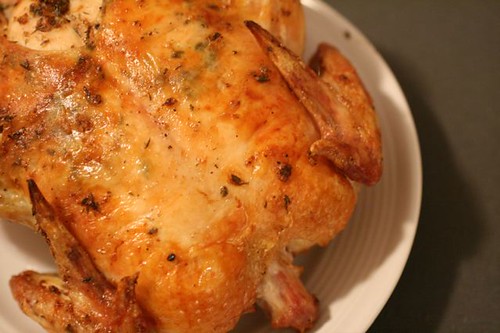
We were in the middle of a wonderful journey together and were entranced by the high mountain meadows and the Jura's stunning peaks. By our humble tent amidst all the splendor, the wine, chicken and fries were transporting--not that we wanted to go anywhere. It seemed all was abloom and a radiant glow suffused everything--the food, the wine, us.

Does that mean that chicken and fries is the perfect combination for cheap burgundy? Maybe.... But it's at least as likely that the best way to enjoy a cheap burgundy is to walk around a mountain lake before enjoying dinner in the late summer light with your beloved. Yeah, that seems the more likely pairing.
What do you think? We'd love to hear your tales of food/wine bliss. We'd also love to know why you ask that question, if you do, and what sort of answer satisfies.
If a wine's back label says anything at all (beyond some gibberish about the glorious winery owner or the wonderful vineyard site) it will recommend food pairings.
Look at any winery's twitter stream and every other tweet will mention food and wine pairing.
We have two questions:
1. Are you, dear reader, interested in this sort of knowledge?
2. Why?
We don't mean to be snide. Rather, we feel that food and wine pairing is both incredibly subjective and relatively unimportant. There are a few no-brainers: most any steak will go well with most any red wine; most any crisp white will go well with shellfish, and some rich and fat whites will go well with some shellfish, Chardonnay and oysters, for instance.
But even those basics are disputed by some, and rightly so. What works for us may not work for you.
Or at least not as well. Because there are very few combinations that are disastrous to either wine or food. Artichokes are famous for making wine taste metallic, and peanut butter can make wine taste funny, too.
On the other hand there are very few combinations that make wine and food transcend themselves to become some magically wonderful taste sensation unlike any you have ever before experienced.
Which, come to think of it, is probably what people are asking for when they ask the question. But don't you think we'd tell you if we knew? And the answer probably isn't, "This wine pairs well with chicken, fish, roast meats, game and pizza," as you'll likely see on that back label.
In fact, the answer probably is not a particular pairing in the first place. Probably what makes some combinations so heavenly--and it does happen, dear reader. If not for you yet, we hope very much that it does soon--what makes some combinations so heavenly, we repeat, is the company.
The Jura (not where we were, though). Thanks, Modzzak.
Chicken, but you knew that: http://www.flickr.com/photos/galant/ / CC BY 2.0
We were in the middle of a wonderful journey together and were entranced by the high mountain meadows and the Jura's stunning peaks. By our humble tent amidst all the splendor, the wine, chicken and fries were transporting--not that we wanted to go anywhere. It seemed all was abloom and a radiant glow suffused everything--the food, the wine, us.

Nope, that wasn't the bottle. Thanks, Wine Label Readers.
What do you think? We'd love to hear your tales of food/wine bliss. We'd also love to know why you ask that question, if you do, and what sort of answer satisfies.
Sunday, January 17, 2010
The PWR plan to take over the world
In the January 18, 2010 issue of The New Yorker, Malcom Gladwell writes about the character traits that make enrepreneurs succecssful. We admit to being momentarily taken aback, as we fit almost none of the criteria.
Successful entrepreneurs
But perhaps we are on the wrong track entirely. Because Gladwell is talking about successful, or not, entrepreneurs. And we are not trying to become wine moguls or anything of the sort. Our mission is clear and succinct and does not include our personal enrichment.
Doubtless we have fretted in vain.
Nor should you fret. The wine is resting happily in barrel. We shall see whether it will be ready for bottling in late spring, in which case it should be available by mid-summer. If not, it will be available when it is ready. And we'll be sure to let you know.
Until then, we thank you for your patience, and wish you happy, and not ruinously expensive, drinking.
[Signed]
The People's Wine Revolution
Successful entrepreneurs
- write a business plan. We have not written a formal business plan, though we do have a mission statement. Does that count?
- take over an existing business, rather than starting from scratch. Last time we checked, no revolutionary wineries were for sale. Or were we supposed to swashbuckle our way in? Oh, wait. There aren't any (other) revolutionary wineries.
- sell to other businesses, rather than consumers. But we want you, the PEOPLE, to have our wine, not other businesses.
- underemphasize marketing. Well, we have TOP people working on our labels, and we've chatted up marketers at parties in an effort to get free marketing advice.
- don't understand the importance of financial controls. Guilty as charged. What is a financial control, anyway?
- Try to compete on price. Well, yes! That's what we're all about. Bringing to market great wine at a great price.
But perhaps we are on the wrong track entirely. Because Gladwell is talking about successful, or not, entrepreneurs. And we are not trying to become wine moguls or anything of the sort. Our mission is clear and succinct and does not include our personal enrichment.
Doubtless we have fretted in vain.
Nor should you fret. The wine is resting happily in barrel. We shall see whether it will be ready for bottling in late spring, in which case it should be available by mid-summer. If not, it will be available when it is ready. And we'll be sure to let you know.
Until then, we thank you for your patience, and wish you happy, and not ruinously expensive, drinking.
[Signed]
The People's Wine Revolution
Thursday, December 17, 2009
Wines for the People is Dead! Long Live Wines for the People!
We have enjoyed ourselves immensely, but it is time to end the Wines for the People blog as we know it. We set out to share our love of wine with our readers, as well as some of our knowledge to help you enjoy wine more, and have fewer disappointing glasses, without having to spend a lot of money. We hope we have succeeded.
When this blog returns--and it will--its new focus will be the wines we are producing as The People's Wine Revolution. PWR Wines is all about delivering top-quality wine at reasonable prices. No surprise there. We do hope you will return to see the new incarnation.
In the meantime, the older posts will remain, and we do hope you'll explore and catch up on any that you may have missed. All the posts are indexed by category here. With New Year's Eve fast approaching you may want to review the video lesson on opening sparkling wines with a sword (or butter knife), found here.
We remain at your service to answer any wine-related (or not) questions you have. Please comment on the site or contact us directly via email: pwr [at] att [dot] net
Cheers,
The People's Wine Revolution
When this blog returns--and it will--its new focus will be the wines we are producing as The People's Wine Revolution. PWR Wines is all about delivering top-quality wine at reasonable prices. No surprise there. We do hope you will return to see the new incarnation.
In the meantime, the older posts will remain, and we do hope you'll explore and catch up on any that you may have missed. All the posts are indexed by category here. With New Year's Eve fast approaching you may want to review the video lesson on opening sparkling wines with a sword (or butter knife), found here.
We remain at your service to answer any wine-related (or not) questions you have. Please comment on the site or contact us directly via email: pwr [at] att [dot] net
Cheers,
The People's Wine Revolution
Monday, December 14, 2009
Ritual Pinot Noir
The 2008 Ritual Pinot Noir from Chile's Casablanca Valley is delicious and represents a great value at $18 (or less).
We have been greatly impressed by the outstanding wines coming out of Chile of late. The success of the Chono Riesling (discussed here), for example, shows that Chile can excel with cool-climate varieties. This wine, our first Chilean Pinot, is confirmation. The wine is definitely new world in style, but it is distinct from any Pinot Noir from California or Oregon. It is medium-bodied, with an elegant tannic structure. The fruit is pretty, with notes of Bing cherries, but what stands out is the attractive peppery, spicy note on the finish.
The wine is produced by Veramonte, who were also involved with the excellent Argentine Cruz Andina Malbec we discussed earlier. Veramonte is a solid Chilean producer and we have long enjoyed their Sauvignon Blanc in particular.
We loved the Ritual Pinot Noir and will be back for more. We shall also continue to seek out Chilean Pinot Noir.
We have been greatly impressed by the outstanding wines coming out of Chile of late. The success of the Chono Riesling (discussed here), for example, shows that Chile can excel with cool-climate varieties. This wine, our first Chilean Pinot, is confirmation. The wine is definitely new world in style, but it is distinct from any Pinot Noir from California or Oregon. It is medium-bodied, with an elegant tannic structure. The fruit is pretty, with notes of Bing cherries, but what stands out is the attractive peppery, spicy note on the finish.
The wine is produced by Veramonte, who were also involved with the excellent Argentine Cruz Andina Malbec we discussed earlier. Veramonte is a solid Chilean producer and we have long enjoyed their Sauvignon Blanc in particular.
We loved the Ritual Pinot Noir and will be back for more. We shall also continue to seek out Chilean Pinot Noir.
Thursday, December 10, 2009
Wine Guerilla Zinfandels
Here at Wines for the People we view wine and the wine industry with the eyes of revolutionaries. Imagine our delight to discover the Wine Guerrilla and the wonderful Zinfandels produced under that label.
What motivates the Wine Guerrilla?
"Wine Guerrilla is a hero to those who seek wines of unabashed uniqueness and character. Wherever proud zinfandel grapes are oppressed and the taste buds of consumers are in peril, Wine Guerrilla is there."
We could not have said it better ourselves.
At our request, Wine Guerrilla provided two of their 2007 Zins, and a yet-to-be-released 2008 Zinfandel. We loved them all.
We never seem to get enough Zinfandel, let alone the good stuff from Dry Creek. When we do get it, it disappears quickly. Why? Because it is so delicious. Zinfandel is an amazing grape that can appear in any number of styles while still retaining its "Zin-ness". Zin can be restrained, believe it or not, and it can be overblown, super- to overripe, and even sweet. Zinfandel can also reflect its origins as well as any other variety, including Pinot noir. We find it does so best when it is somewhat less than overripe.

The 2007 Dry Creek Valley Zinfandel, $22, was everything we look for in Dry Creek Zin. It is delicious and well balanced, and it tastes like it comes from Dry Creek, with wonderful red berry flavors and sufficient acidity to match the alcohol and tannin. If you are not familiar with Zinfandel from Sonoma's Dry Creek Valley, this wine is a great introduction.

We also enjoyed the 2007 Goat Trek Vineyard Block 6 Zinfandel, $25, which is also from Dry Creek Valley, though not the valley floor. As the back label explains:
"It would take you a 45 minute drive up a dirt road to a 1250-foot elevation to reach the grapes of Goat Trek Vineyard. So we decided to bring them to you instead. You can thank us after your first glass"
This wine is incredible. The same flavor profile as the Dry Creek Valley Zin described above, but turned up a notch. Brilliant, zingy raspberry fruit that tasted almost candied (though not sweet). And still perfectly balanced. Some of this wine survived to day 2, when we found it deliciously savoury and sapid. It made us want to close our eyes and meditate on deliciousness.
The third wine may have been our favorite. This was a 2008 Zinfandel from the Russian River Valley. Wine Guerrilla will release it in January in a lineup of eight 2008 Zins at ZAP, an annual Zinfandel showcase/tasting event in San Francisco.
The Russian River Valley abuts Dry Creek Valley, but it is generally cooler than its neighbor. There is plenty of Zinfandel planted in the RRV, but it is perhaps better known as Pinot Noir country. We typically find that Zinfandels from Dry Creek are more to our liking than those from Russian River, but this wine confounded our expectations. As a 2008 wine, it is still very young, but it did not take long for it to loosen up and begin revealing its layers of flavors. It continued to grow more beautiful with each glass. With a little more time in the bottle and perhaps a good decanting, this wine will sing.
The wine does represent its origins. We find that Russian River Valley Pinots often have a cola/sassafrass character. In Pinot we find that somewhat off-putting, but this Zinfandel has it as well, and it works.
We look forward to returning to these wines and to further exploration of the Wine Guerrilla's creations.
What motivates the Wine Guerrilla?
"Wine Guerrilla is a hero to those who seek wines of unabashed uniqueness and character. Wherever proud zinfandel grapes are oppressed and the taste buds of consumers are in peril, Wine Guerrilla is there."
We could not have said it better ourselves.
At our request, Wine Guerrilla provided two of their 2007 Zins, and a yet-to-be-released 2008 Zinfandel. We loved them all.
We never seem to get enough Zinfandel, let alone the good stuff from Dry Creek. When we do get it, it disappears quickly. Why? Because it is so delicious. Zinfandel is an amazing grape that can appear in any number of styles while still retaining its "Zin-ness". Zin can be restrained, believe it or not, and it can be overblown, super- to overripe, and even sweet. Zinfandel can also reflect its origins as well as any other variety, including Pinot noir. We find it does so best when it is somewhat less than overripe.
The 2007 Dry Creek Valley Zinfandel, $22, was everything we look for in Dry Creek Zin. It is delicious and well balanced, and it tastes like it comes from Dry Creek, with wonderful red berry flavors and sufficient acidity to match the alcohol and tannin. If you are not familiar with Zinfandel from Sonoma's Dry Creek Valley, this wine is a great introduction.
"It would take you a 45 minute drive up a dirt road to a 1250-foot elevation to reach the grapes of Goat Trek Vineyard. So we decided to bring them to you instead. You can thank us after your first glass"
This wine is incredible. The same flavor profile as the Dry Creek Valley Zin described above, but turned up a notch. Brilliant, zingy raspberry fruit that tasted almost candied (though not sweet). And still perfectly balanced. Some of this wine survived to day 2, when we found it deliciously savoury and sapid. It made us want to close our eyes and meditate on deliciousness.
The third wine may have been our favorite. This was a 2008 Zinfandel from the Russian River Valley. Wine Guerrilla will release it in January in a lineup of eight 2008 Zins at ZAP, an annual Zinfandel showcase/tasting event in San Francisco.
The Russian River Valley abuts Dry Creek Valley, but it is generally cooler than its neighbor. There is plenty of Zinfandel planted in the RRV, but it is perhaps better known as Pinot Noir country. We typically find that Zinfandels from Dry Creek are more to our liking than those from Russian River, but this wine confounded our expectations. As a 2008 wine, it is still very young, but it did not take long for it to loosen up and begin revealing its layers of flavors. It continued to grow more beautiful with each glass. With a little more time in the bottle and perhaps a good decanting, this wine will sing.
The wine does represent its origins. We find that Russian River Valley Pinots often have a cola/sassafrass character. In Pinot we find that somewhat off-putting, but this Zinfandel has it as well, and it works.
We look forward to returning to these wines and to further exploration of the Wine Guerrilla's creations.
Sunday, December 6, 2009
Two More Treats from Bonny Doon
When you see a great painting or play, or read a great book, the images and ideas can swirl around in your head for weeks. How much you talk about a movie after seeing it is a good gauge of how good the movie was.
About a week ago we finished reading Been Doon So Long, a new book ($35) by Bonny Doon's founder and President-for-Life Randall Grahm. Later we enjoyed the Bonny Doon 2005 Le Cigare Volant ($30). Both book and wine have been very much in mind ever since.

The wine was amazing. We heeded Mr. Grahm's strongly emphasized advice to decant the wine, and we reiterate that advice to you if you try this wine. In fact we recommend either a double or triple decanting (i.e., bottle to decanter, decanter back to bottle, bottle back to decanter), or letting the wine sit for at least an hour after decanting before taking a sip. As a friendly reminder, your decanter need be nothing fancy--an empty wine bottle will do if you have one on hand. We used a plastic tri-pour beaker, which cost about $1.

Here's why you should decant and wait. Our first sips revealed the wine to be pleasant, with silky tannins--a simple if tasty wine. About an hour after decanting, however, the wine was something else entirely. The wine was still "quiet," in the sense of not being overly extracted or tasting like a fruit compote, but it was also intense and lively on the palate, with multitudinous delicate flavors dancing on the palate. This is the sort of complexity we love in wine, really what wine is all about. Alas, by the time we reached this stage, most of the bottle was gone. Decant and wait, and you can start at the exciting part.
As you will see below, Grahm is redefining the mission of Bonny Doon. In an Apologia accompanying the wine, Grahm writes, "[Le Cigare Volant] has become the truest lens of my current winemaking ideas, aspirations and obsessions, a reflection, of where I am going as a winemaker and where the company itself is headed." In that light, this wine promises a very bright future for Bonny Doon Vineyard.
At $30 the 2005 Le Cigare Volant is at the high end of wines we recommend on this site, but this wine is worthy of a splurge, and would make a great present for any wine lover you know. Just remember to decant!
Been Doon So Long would also make a great gift for anyone who enjoys wine and has at least some appreciation of word play. Puns and such are not our favorite amusements, but Grahm is extremely gifted with his word play and never once did we groan. His writing is also full of allusions and references, some to the wine industry and its players but most to literary works.
The book is called a "Vinthology," so we assumed that it would be a collection of pieces from the always amusing Bonny Doon newsletter. It is that, but it is also much more. How many collections of newsletter pieces can be said to have a narrative arc? This book, despite being divided into sections by type of writing (in "Ficciones," for example, we find "Don Quijones, the Man for Garnacha or A Confederacy of Doonces," while "Poesy Galore" features "The Love Song of J. Alfred Rootstock" and "Da Vino Commedia: The Vinferno"), decidedly has a narrative arc.
The plot begins with Grahm at the helm of a large wine corporation that seems to have little in common with his original and still held winemaking ideals. He lampoons the wine industry, which can always use a good poke (if not kick) in the ribs, but he also probes his conscience. Throughout the book and especially toward the end, Grahm grows ever more philosophical as he tries both to understand and to explain his enological yearnings. A couple of these entries are appropriately called "meditations." These resonated with us, who also consider ourselves to be philosophical winemakers, and we will return to them whenever we begin to doubt or need inspiration.
As the book ends--and this is really no spoiler--Grahm has dramatically altered the course of Bonny Doon in the hope of returning to his original vision. The wines Grahm sent with the book, the Cigare Volante (supra) and the Albariño reviewed earlier, show us that Grahm is very much on track. Mr. Grahm may protest that he still has far to go to produce the wines he has always wanted to produce. We will eagerly watch and taste his progress.
About a week ago we finished reading Been Doon So Long, a new book ($35) by Bonny Doon's founder and President-for-Life Randall Grahm. Later we enjoyed the Bonny Doon 2005 Le Cigare Volant ($30). Both book and wine have been very much in mind ever since.

Autumn tableau of Tri-Pour beaker used as decanter and sadly empty bottle of Le Cigare Volant
The wine was amazing. We heeded Mr. Grahm's strongly emphasized advice to decant the wine, and we reiterate that advice to you if you try this wine. In fact we recommend either a double or triple decanting (i.e., bottle to decanter, decanter back to bottle, bottle back to decanter), or letting the wine sit for at least an hour after decanting before taking a sip. As a friendly reminder, your decanter need be nothing fancy--an empty wine bottle will do if you have one on hand. We used a plastic tri-pour beaker, which cost about $1.
Here's why you should decant and wait. Our first sips revealed the wine to be pleasant, with silky tannins--a simple if tasty wine. About an hour after decanting, however, the wine was something else entirely. The wine was still "quiet," in the sense of not being overly extracted or tasting like a fruit compote, but it was also intense and lively on the palate, with multitudinous delicate flavors dancing on the palate. This is the sort of complexity we love in wine, really what wine is all about. Alas, by the time we reached this stage, most of the bottle was gone. Decant and wait, and you can start at the exciting part.
As you will see below, Grahm is redefining the mission of Bonny Doon. In an Apologia accompanying the wine, Grahm writes, "[Le Cigare Volant] has become the truest lens of my current winemaking ideas, aspirations and obsessions, a reflection, of where I am going as a winemaker and where the company itself is headed." In that light, this wine promises a very bright future for Bonny Doon Vineyard.
At $30 the 2005 Le Cigare Volant is at the high end of wines we recommend on this site, but this wine is worthy of a splurge, and would make a great present for any wine lover you know. Just remember to decant!
Been Doon So Long would also make a great gift for anyone who enjoys wine and has at least some appreciation of word play. Puns and such are not our favorite amusements, but Grahm is extremely gifted with his word play and never once did we groan. His writing is also full of allusions and references, some to the wine industry and its players but most to literary works.
The book is called a "Vinthology," so we assumed that it would be a collection of pieces from the always amusing Bonny Doon newsletter. It is that, but it is also much more. How many collections of newsletter pieces can be said to have a narrative arc? This book, despite being divided into sections by type of writing (in "Ficciones," for example, we find "Don Quijones, the Man for Garnacha or A Confederacy of Doonces," while "Poesy Galore" features "The Love Song of J. Alfred Rootstock" and "Da Vino Commedia: The Vinferno"), decidedly has a narrative arc.
The plot begins with Grahm at the helm of a large wine corporation that seems to have little in common with his original and still held winemaking ideals. He lampoons the wine industry, which can always use a good poke (if not kick) in the ribs, but he also probes his conscience. Throughout the book and especially toward the end, Grahm grows ever more philosophical as he tries both to understand and to explain his enological yearnings. A couple of these entries are appropriately called "meditations." These resonated with us, who also consider ourselves to be philosophical winemakers, and we will return to them whenever we begin to doubt or need inspiration.
As the book ends--and this is really no spoiler--Grahm has dramatically altered the course of Bonny Doon in the hope of returning to his original vision. The wines Grahm sent with the book, the Cigare Volante (supra) and the Albariño reviewed earlier, show us that Grahm is very much on track. Mr. Grahm may protest that he still has far to go to produce the wines he has always wanted to produce. We will eagerly watch and taste his progress.
Monday, November 30, 2009
Falling Star Boxed Wines

Image from Stardusts and Sequins used under the Creative Commons license.
In time samples came our way, and.... well, we can say that we finished the 2009 Cuyo Chardonnay ($20/3L). We found nothing remarkable about the wine, but it did not take up much space in the fridge, and it was often handy to have a drinkable white at the ready with no deliberation about what bottle to open, let alone chill. So high marks for convenience, at least.
We were disappointed by the 2008 Cuyo Malbec ($20/3L). Malbec is Argentina's signature grape, so we expected much more from this wine, and the box remains nearly untouched.
Our hopes remain for the 3L bag-in-box category. As soon as someone actually does package a high-quality wine this way, the market will be theirs. But so far the promises to do so have gone unfulfilled.
Subscribe to:
Posts (Atom)



 Posts
Posts



